29th October, 2023
This week I went to a talk by Dr Twigs Way held by Clare Horticultural Society. It was the first time I’ve been to an event by this group as I don’t really consider faffing around in my tiny garden as horticulture and my knowledge of plants is limited. I enjoy pottering around, though, and the success of seeds actually turning to shoots and then hopefully into something a bit more substantial is joyous (if not somewhat surprising).
One of the books I’ve got on the go at the moment is The Hidden Horticulturists: The Working-Class Men Who Shaped Britain’s Gardens by Fiona Davison which is fascinating and ‘a celebration of the unsung heroes of horticulture and a surprising book about fraud, scandal and madness…’. This book popped into my life in a serendipitous way as I’m researching the life of my great-grandfather who was born in 1870 in West Butterwick, North Lincolnshire into a family of farmers. When he was a young lad he took the position of gardener’s boy at Normanby Hall. There is more to tell about my great-grandfather, but for now, I’m interested in his life at a grand hall, as a gardener’s boy, living in the grounds in a bothy.
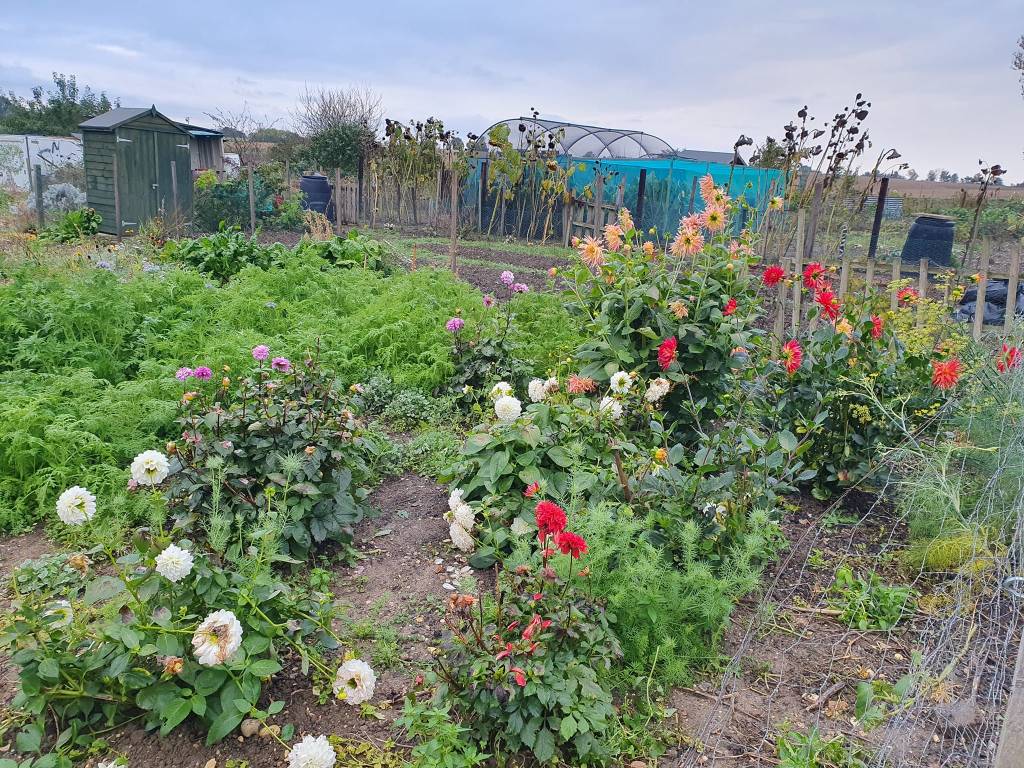
As most of you know, I regularly walk across the fields at the back of my cottage and snuggled between the common and fields is a glorious collection of allotments. Sometimes I dawdle and wonder about taking one on, imagining the things I would grow. Onions, carrots, beetroot, brussels sprouts, a cage for raspberries, dahlias and chrysanthemums. I’d have a pond for wildlife and beside it I’d plonk a stripy deckchair in which to sit and read, and I’d pour tea from a flask into an old tin mug. I can hear the banter with fellow gardeners, smile at the joy of swapping seeds. Oh, yes. I’d very much like an allotment. But I’ve discovered that the trick to a happy life is to recognise that certain things are beyond my capabilities.
Now, my paternal grandfather (my great-grandfather’s son-in-law) was a keen gardener (a talent that my mother possesses, too) and when he was a young man he would top up his wages from the steelworks by taking on gardening jobs. He was a hard worker with no time to dream about deckchairs and flasks of tea….. I think I might see the flaw in my pipe dreams. He knew about plants and mulching and grafting and roses. And I wonder how he accumulated all this knowledge in a time when there was no internet, just a few gardening books and word of mouth.
Anyway, the event I went to earlier this week was a presentation by Dr Twigs Way about the history of allotments. Dr Way was incredibly entertaining and in an hour, she guided us through the politics and Poor Laws and philanthropists and gardening for necessity and gardening for pleasure that weave a rich and fascinating patchwork of allotments through time. I learned that in many places allotments are under threat as the space is wanted for housing. That in the 1800s landowners feared their workers would refuse overtime or be too tired to work their fields if they were spending time on their own allotments. That the church feared they’d lose their congregation as the six-day working week left the Sunday free – a day to attend church, not to be out gardening. Consequently, strict rules were created around leasing allotments, such as having to attend church at least once on a Sunday or lose your little plot of land. I suppose the great and the good feared they were losing their grip and that working people might begin to have a little autonomy. Mmm – plus ça change.
All this has fuelled my interest in my great-grandfather. What sort of world did he live in? His father owned a smallholding but in 1880 he sold up and moved the family to Scunthorpe – a boomtown once the seam of ironstone was discovered. I wonder if his father missed working the land? Did he have an allotment in Scunthorpe as a reprieve from the grime and sweat of the steelworks?
Today there are 427 allotments over five sites in Scunthorpe, which shows that growing your own food is still a popular pastime. We now know about the benefits of fresh air, mindful meditation (and that’s what gardening is for me), social isolation and loneliness.
Perhaps I’m not ready for an allotment. It’s just not my time. But there’s nothing stopping me from gazing over them and daydreaming about the time when one will be mine, and all the things I will grow. I think I might make a start now by looking for a deckchair.
 Jane Lomas - writer